


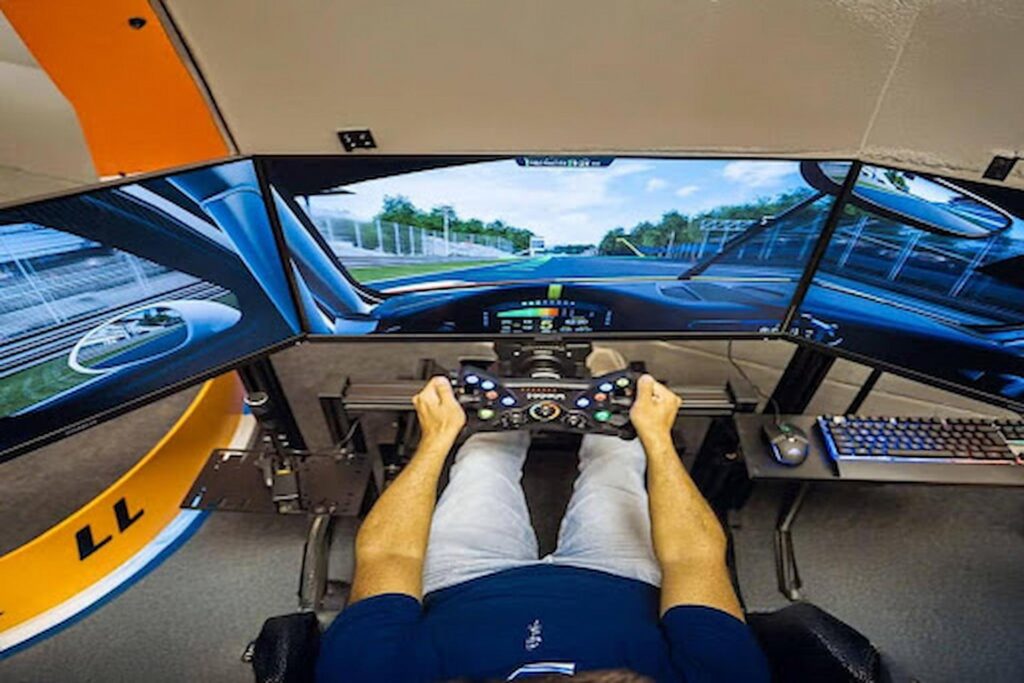
Motorsport may look like pure adrenaline, but winning comes down to discipline, precision, and intelligent skill-building. Today’s advanced sim racing platforms are transforming how drivers train—sharpening reactions, improving focus, and mastering track behaviour before ever stepping into a physical car. Explore how virtual racing builds real competitive strength.
Modern motorsport demands more than raw talent. Drivers must analyse data, refine consistency, and make split-second decisions under pressure. As professional training becomes increasingly technical and expensive, sim racing has emerged as a powerful tool that bridges virtual practice and real-world motorsport performance.
Far from being a casual gaming hobby, sim racing now mirrors the intensity and accuracy of track conditions. When paired with high-performance hardware like the Moza R5 bundle, racers can experience detailed force feedback, realistic pedal feel, and true racing dynamics that push skills to a professional level.
Why Sim Racing Matters in Driver Development
Real racing environments are expensive, physically demanding, and risky. Simulators offer limitless practice time without tyre wear, fuel cost, or safety hazards. This accessibility has fundamentally changed motorsport training, giving aspiring drivers the opportunity to refine technique every day.
Key advantages include:
- Unlimited laps for mastering tracks and braking points
- Ability to analyse mistakes instantly and adjust technique
- Training consistency without weather or scheduling limitations
- Reduced financial pressure compared to real track hours
The more drivers practise in realistic virtual environments, the more instinctive and confident they become behind the wheel.
Building Racecraft and Track Intelligence
Racecraft is the ability to navigate competition intelligently—timing overtakes, defending position, and avoiding collisions. Sim racing environments replicate authentic racing scenarios, teaching drivers to anticipate rather than react.
Skills developed include:
- Reading competitor movement during side-by-side battles
- Choosing defensive vs. attacking lines
- Understanding optimal race pace vs. reckless aggression
- Managing mental pressure during tight races
These strategic decisions matter as much as raw driving speed, and repeated simulation builds the instinctive judgment required to win.
Reaction Time, Focus & Mental Endurance
When stakes are high and speeds increase, milliseconds decide outcomes. Studies show that simulator training improves neurological reaction speed, helping drivers make quick, precise corrections.
Sim racing teaches:
- Anticipation of grip loss, understeer, and oversteer
- Fast recovery responses during unexpected incidents
- Split-second braking adjustments and steering control
- Strengthened concentration over long race sessions
Staying calm under pressure is a learned skill—and simulators provide relentless repetition without real-world risk.
Understanding Car Control & Physics
Sim racing software replicates vehicle behaviour realistically, including tyre grip, braking resistance, aerodynamics, and suspension travel. With premium wheelbases and pedal sets, drivers learn to feel the car instead of just seeing it.
Using equipment like the Moza R5 bundle enables:
- Enhanced feedback to detect traction changes
- Gradual learning of throttle modulation and brake sensitivity
- Precision steering inputs for cornering consistency
- Realistic pedal muscle memory transferable to real race cars
Better feel for the car leads to fewer errors and smoother laps.
Data-Driven Improvement
Sim racing platforms record telemetry—lap times, speed traces, braking points, gear usage, and racing lines. Analysing this data eliminates guesswork and accelerates learning.
Drivers gain the ability to:
- Compare laps to understand strengths and weaknesses
- Adjust setups strategically for different driving styles
- Target specific improvement areas such as corner entry and exit speed
Having objective data transforms training from trial-and-error to scientific progress.
Actionable Tips for Faster Sim-to-Real Skill Transfer
Improve Driving Precision
- Practise smooth steering and pedal input instead of aggressive movements.
- Focus on consistency across multiple laps, not single-lap speed.
Master Braking Technique
- Learn threshold braking—maximising force without locking wheels.
- Use visual markers to build muscle memory.
Develop Race Awareness
- Race different driver skill levels to strengthen tactical ability.
- Review replays to understand positioning mistakes.
Build Mental Discipline
- Practise long endurance sessions to improve concentration.
- Set performance goals: lap-time targets, cleaner racing, reduced errors.
Avoid Hardware Over-Adjustments
- Start with realistic difficulty and gradually increase complexity.
The Future of Motorsport Training
The motorsport industry increasingly recognises virtual training as a core development method. Rising talent often begins with simulator racing before progressing to competitive circuits, and many professionals continue using simulators for race preparation throughout their careers.
As technology advances, virtual racing experiences continue to close the gap between simulation and reality. With realistic physics, advanced hardware, and data-based learning, sim racing offers an equal platform for entry into competitive motorsport regardless of resources or geography.
Conclusion
Sim racing is far more than an entertaining hobby—it is an accessible, effective, and sophisticated training environment for developing genuine motorsport talent. From strengthening reaction time and mental endurance to mastering track knowledge and racecraft strategy, virtual racing builds the skills that define successful drivers. With high-quality equipment like the Moza R5 bundle, training becomes even more immersive and technically accurate, helping racers refine instinct, confidence, and precision.
Whether you’re beginning your career or sharpening professional performance, investing in simulation practice is one of the smartest ways to progress. The virtual track is always open—start training today and transform your racing potential into real-world performance.