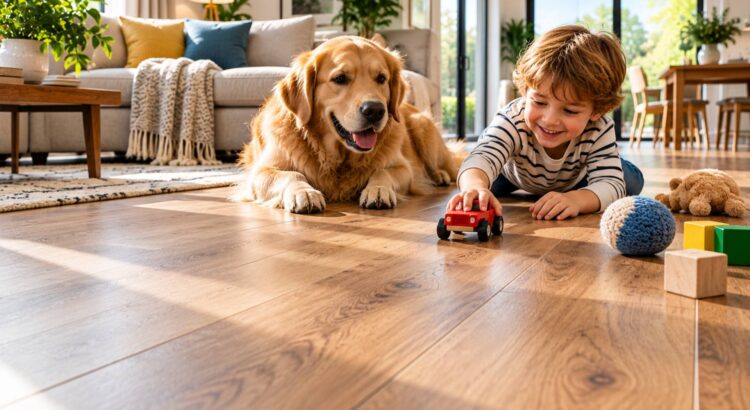
A home shared with children and pets needs flooring that can handle real life. Muddy paws, dropped toys, food spills, running feet, pet claws, and the occasional accident can quickly expose weaknesses in a floor that was chosen mainly for appearance.
That does not mean family-friendly flooring has to look plain or industrial. Many attractive materials combine durability with easy cleaning, comfort, and modern design. The key is choosing quality flooring that fits the way your household actually uses each room rather than selecting a surface purely because it looks good in a showroom.
What Matters Most in a Family-Friendly Floor?
Homes with pets and children place several different demands on flooring at the same time. A surface may need to withstand scratches from claws, moisture from spills, toys being dragged across it, and frequent cleaning.
Before comparing materials, focus on a few practical qualities:
- Scratch resistance
- Stain resistance
- Moisture resistance
- Easy cleaning
- Comfortable footing
- Slip resistance
- Noise control
- Durability in busy areas
No single flooring material is perfect in every category. The best option is usually the one that performs well against the problems most common in your household.
Luxury Vinyl Flooring Is a Strong All-Round Choice
Luxury vinyl flooring is popular in family homes because it offers a useful balance between durability, appearance, and everyday maintenance.
It is available in designs that imitate timber, stone, tile, and other materials. This allows homeowners to create a stylish interior without automatically choosing a more demanding natural surface.
Vinyl can be particularly useful around children because spills are generally easy to wipe away. Many products also provide better moisture resistance than traditional wood flooring.
For pet owners, a good-quality surface can cope well with normal claw traffic, although resistance varies by product. Look closely at the wear layer and manufacturer guidance rather than assuming every vinyl floor offers the same level of durability.
Its slightly softer feel can also make it more comfortable underfoot than hard tile, particularly in kitchens and family rooms where people spend long periods standing or playing.
Laminate Flooring Offers Durability at a Practical Price
Modern laminate flooring can be a practical choice for households dealing with children, pets, and frequent foot traffic.
Laminate contains a protective wear layer above its decorative surface. Better-quality products can resist everyday scratches, dents, and stains while reproducing the look of timber or stone.
It works particularly well in living rooms, dining rooms, hallways, bedrooms, and play areas.
Water resistance needs more attention. Some laminate products are designed to cope with moisture better than others. Families considering laminate for kitchens, entrances, or other spill-prone areas should check whether the specific product is water-resistant or waterproof and follow its installation requirements carefully.
Textured and mid-tone finishes are often useful in busy homes because they can disguise minor dust, pet hair, and everyday marks better than highly polished dark surfaces.
Porcelain Tile Handles Heavy Family Use
Porcelain tile is one of the toughest flooring choices available for residential spaces.
It can work especially well in entrances, bathrooms, kitchens, mudrooms, and utility areas where water, dirt, and frequent cleaning are normal parts of daily life.
The hard surface is difficult for pet claws to damage, and most everyday spills can be cleaned without much trouble.
Tile also comes in a wide range of designs. Homeowners can choose finishes that resemble wood, natural stone, concrete, or traditional ceramic patterns.
There are trade-offs. Tile can feel cold and hard, which may not be ideal in children’s bedrooms or areas where toddlers spend a lot of time playing on the floor. Dropped objects are also more likely to break.
Rugs and runners can soften high-use areas while preserving the durability of the tile underneath.
Engineered Wood Can Work With the Right Finish
Families who love real timber may not want to give it up simply because they have children or pets.
Engineered wood provides a genuine wood surface over a layered core. It can offer the warmth and character of timber while giving homeowners more installation options than some solid wood floors.
Its suitability for pets depends heavily on the wood species, surface finish, texture, and household habits.
A brushed or matte finish may hide small scratches more effectively than a glossy surface. Medium wood tones also tend to disguise everyday marks better than very pale or extremely dark floors.
Pet claws should still be kept trimmed, and spills need to be cleaned promptly. Engineered wood is not as carefree as tile or vinyl, but families willing to maintain it properly can still enjoy natural timber flooring.
Solid Hardwood Offers Long-Term Character
Solid hardwood is durable in a different way.
It may develop scratches, dents, and marks during busy family life, but many homeowners see those changes as part of the material’s natural character. Unlike many manufactured floors, hardwood can often be sanded and refinished later.
Harder wood species generally cope better with active households than softer woods.
Surface finish also matters. A satin or matte finish tends to make everyday wear less obvious than high gloss. Distressed, wire-brushed, or naturally varied boards can be forgiving because minor marks blend into the existing texture.
Hardwood may suit families who value longevity and are comfortable with the fact that a natural floor will change over time.
Cork Can Make Play Areas More Comfortable
Cork is worth considering in bedrooms, playrooms, and quieter family spaces.
Its naturally softer feel makes it comfortable underfoot and can help reduce noise from footsteps and dropped objects. This may be particularly useful in upstairs rooms or homes where children spend plenty of time playing on the floor.
Cork also provides a warmer feel than stone or tile.
However, it needs protection from excess moisture and sharp pet claws. Heavy furniture can sometimes leave impressions, so furniture pads may be useful.
Cork is therefore better suited to selected rooms rather than every area of a busy family home.
Carpet Still Has a Place in Family Homes
Hard flooring tends to dominate conversations about homes with pets and children, but carpet still has useful qualities.
It provides warmth, softness, and noise reduction. Bedrooms and upstairs family areas may feel more comfortable with carpet than tile or hard timber.
For children’s rooms, the soft surface can make floor play more pleasant and reduce the impact of minor tumbles.
Pet owners need to think more carefully. Fur, dirt, odors, and accidental stains can be harder to remove from carpet than from hard flooring.
If carpet is preferred, choose a durable, stain-resistant option with a relatively dense pile. Very long or loose fibers may be more difficult to maintain around pets.
Consider How Easily Pet Hair Will Show
Floor color has a surprisingly large influence on how clean a home appears.
A dark floor can highlight pale pet hair, while a very light surface can make dark fur more obvious. Matching the general tone of the flooring to the color of your pet’s coat can reduce how visible loose hair appears between cleaning sessions.
Pattern and texture also help.
Natural wood grain, subtle stone effects, and moderately varied surfaces tend to disguise hair and small marks better than completely uniform finishes.
This does not replace regular cleaning, but it can make a busy room look presentable for longer.
Choose Scratch-Resistant Finishes for Dogs
Dogs can put more pressure on flooring than many other pets, especially large or energetic breeds.
Claws are most likely to leave visible marks when dogs run, turn suddenly, or repeatedly travel through the same areas.
Good options include porcelain tile, durable vinyl, suitable laminate, and harder timber with a forgiving finish.
Keeping nails trimmed is equally important. Even a strong floor benefits when pet claws are maintained.
Rugs can also protect high-traffic routes such as entrances, hallways, and the space between a pet’s bed and an exterior door.
Think About Traction for Pets and Children
A floor can be durable but still be uncomfortable or unsafe if it becomes extremely slippery.
Very smooth polished surfaces can make it difficult for some dogs to maintain grip, particularly older animals. Young children running in socks may face similar problems.
Texture can improve traction.
Matte finishes, lightly textured surfaces, rugs, and runners can make busy routes easier to navigate. However, strongly textured flooring may trap more dirt and require additional cleaning.
The goal is to find a surface that provides enough grip without becoming difficult to maintain.
Water Resistance Matters More Than You Think
Water does not only come from kitchen spills and bathroom splashes.
Pet water bowls can be knocked over. Wet dogs may come indoors after rain. Children can spill drinks or leave damp towels on the floor.
For this reason, moisture resistance deserves serious attention in family homes.
Porcelain tile and many vinyl products are strong choices for areas where water is common. Certain laminate floors also provide improved water resistance, but product specifications should always be checked.
Natural timber requires more care because standing moisture can eventually damage the surface or joints.
Wherever pet bowls are placed, a washable waterproof mat can provide useful extra protection.
Select Flooring According to the Room
Using one flooring material throughout the entire home is not always necessary.
A practical family house may use tile near entrances, vinyl in the kitchen, engineered wood in living areas, and carpet in bedrooms.
Different materials can still look coordinated if their colors and undertones work together.
Thinking carefully about flooring choices based on traffic, practicality, appearance, and expected wear can help avoid choosing a surface that performs well in one room but poorly in another.
A room-by-room approach often produces a better balance between durability and comfort.
Pay Extra Attention to Entryways
The entrance is one of the hardest-working areas in a family home.
Shoes bring in grit, pets track in dirt, wet coats drip water, and children often leave bags or outdoor equipment nearby.
A durable, easy-clean surface makes daily maintenance much easier.
Tile and vinyl are practical choices, particularly when combined with a large entrance mat.
The mat should be large enough for people and pets to take several steps across it before reaching the main floor. This catches more dirt than a small decorative mat positioned directly at the door.
Do Not Overlook Noise
Children running and pets moving across hard floors can create more noise than expected.
This is particularly noticeable in two-story homes and apartments.
Underlayment can help with some types of laminate and engineered flooring. Rugs and runners can also reduce sound in hallways, living rooms, and play spaces.
Cork and carpet naturally absorb more sound than hard tile.
Noise control may not seem important while comparing samples in a store, but it can have a significant impact on everyday comfort once flooring covers a large area of the home.
Look at Maintenance Before Appearance
A beautiful floor that requires constant care can quickly become frustrating.
Think realistically about how frequently you are prepared to sweep, vacuum, mop, polish, seal, or refinish the surface.
Homes with shedding pets usually require frequent vacuuming. Households with young children may need to wipe spills several times a day.
Smooth, easy-clean surfaces can reduce the amount of work involved.
Always check the manufacturer’s cleaning instructions. Strong cleaners, steam cleaning, and excessive water can damage some flooring materials even when they appear tough.
Test Samples at Home
Flooring samples should be viewed in the room where the material will actually be installed.
Natural light, artificial lighting, furniture, and wall colors can make a flooring shade look very different from how it appears online or in a showroom.
Place samples near pet beds, furniture, doorways, and windows.
It can also be useful to place a little pet hair on the sample to see how visible it becomes. For families with children, consider whether crumbs, dust, and small marks stand out immediately.
Practical testing can reveal details that photographs cannot show.
Protect Your Flooring After Installation
Even durable flooring lasts longer when simple protective habits become part of daily life.
Useful measures include:
- Keep pet nails trimmed.
- Place mats at exterior doors.
- Clean spills quickly.
- Use pads beneath furniture legs.
- Vacuum grit before it scratches surfaces.
- Put washable mats beneath pet bowls.
- Use rugs in heavily traveled areas.
- Avoid dragging heavy furniture.
These steps are inexpensive and can significantly reduce unnecessary wear.
Frequently Asked Questions
What is the best flooring for homes with dogs?
Porcelain tile, quality vinyl, and durable laminate are strong options because they can resist everyday wear and are relatively easy to clean. The best choice depends on the dog’s size, activity level, and the room where the flooring will be installed.
What flooring is best for young children?
Vinyl, cork, laminate, engineered wood, and carpet can all work well depending on the room. For play spaces, comfort and easy cleaning are particularly important.
Does dog urine damage flooring?
It can damage certain materials if it remains on the surface for too long. Natural wood is particularly sensitive to moisture. Clean accidents promptly and follow the flooring manufacturer’s care recommendations.
Is laminate suitable for pets?
Yes, suitable laminate can work well in homes with pets. Look for strong scratch resistance, appropriate wear ratings, moisture protection, and a surface that offers reasonable grip.
Is vinyl flooring safe for pets to walk on?
Vinyl is commonly used in pet-friendly households. A lightly textured or matte surface may provide better traction than a very smooth finish.
Are dark floors good for homes with pets?
They can look attractive, but light-colored pet hair, dust, and scratches may be more visible on very dark surfaces. Mid-tone and naturally varied finishes are often easier to live with.
Should every room use the same pet-friendly flooring?
No. Different rooms face different levels of moisture, traffic, noise, and wear. Using coordinated materials in different parts of the home can provide better overall performance.
Conclusion
Choosing flooring for a home with pets and children means thinking beyond appearance. The floor needs to cope with claws, running feet, spills, toys, dirt, moisture, and frequent cleaning without making everyday life unnecessarily difficult.
Luxury vinyl, laminate, porcelain tile, engineered wood, hardwood, cork, and carpet can all work when used in suitable spaces. The best solution depends on the room, household habits, pet activity, maintenance expectations, and the level of comfort you want.
Pay close attention to scratch resistance, water protection, traction, cleaning requirements, and how easily the surface shows hair or marks. Test samples inside your home and think about how the floor will perform several years from now, not just how it looks on installation day.
A well-chosen floor gives children space to play, pets room to move, and adults less reason to worry about every spill or scratch.